
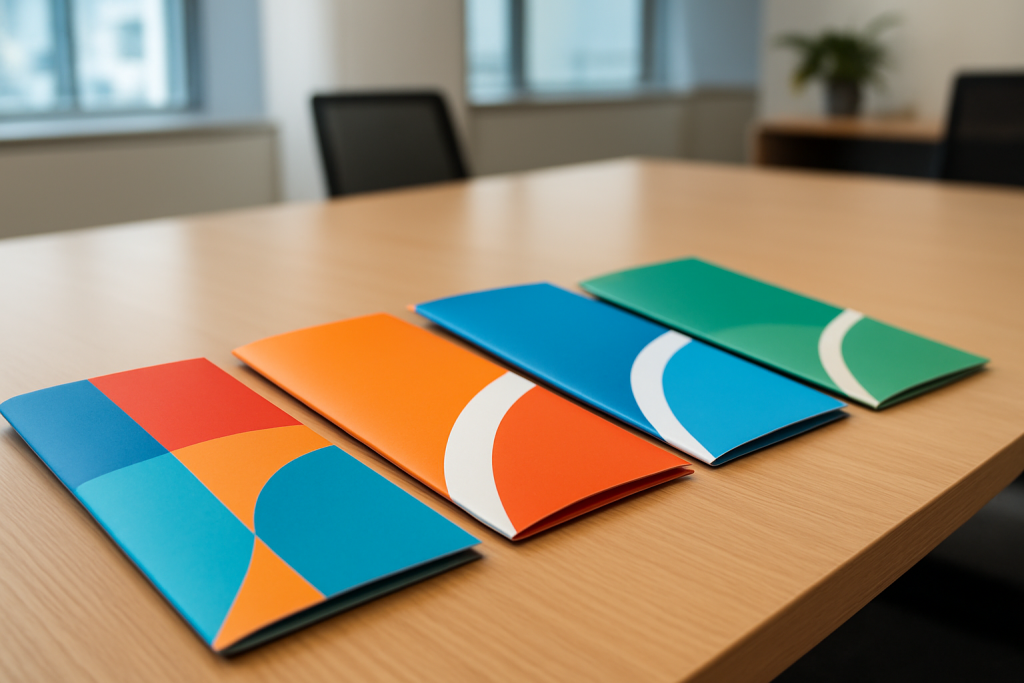
Versatile Printing Services for Modern Brands and Organizations
Explore the growing role of printing services in brand communication and marketing strategies.
Modern brands and organizations rely on clear, consistent, and memorable communication to connect with their audiences. From business stationery and promotional materials to event displays and customized marketing products, printing services provide practical ways to turn brand concepts into tangible communication. As businesses continue to combine digital campaigns with physical experiences, professionally produced print materials remain a valuable part of brand presentation, customer engagement, and organizational communication.
Contents
- The Growing Role of Print in Brand Communication
- Brochures Provide Detailed Brand Information
- Business Stationery Supports Professional Operations
- Promotional Print Expands Marketing Opportunities
- Event Printing Creates a Complete Experience
- Statistics Highlight the Value of Tangible Marketing
- Customized Printing Supports Different Industries
- Quality Influences Brand Presentation
- Print and Digital Marketing Work Together
- Sustainable Choices Are Becoming More Relevant
- Conclusion
The Growing Role of Print in Brand Communication
Digital platforms have transformed how businesses communicate, but physical marketing continues to offer a distinctive customer experience. Printed materials can be displayed, shared, collected, and revisited without requiring a digital device.
Industry statistics and marketing research frequently examine the relationship between physical media, consumer attention, direct communication, and brand recognition. These trends demonstrate the continued relevance of print as part of a broader communication strategy. Modern organizations can use printed materials alongside websites, email campaigns, social media, and other digital channels to create a connected brand presence.
A recognizable brand depends on consistency. Colors, typography, logos, imagery, and messaging can be carried across different printed products to create a unified visual identity.
Business cards, letterheads, brochures, folders, postcards, posters, catalogs, and promotional displays can all reflect the same design standards. When these materials share recognizable elements, audiences can develop stronger visual familiarity with the organization.
For established brands, consistent print design also helps maintain professionalism across departments, locations, events, and customer interactions.
Brochures Provide Detailed Brand Information
Brochures remain a practical format for presenting products, services, programs, and organizational information. Their flexible layout allows businesses to combine photographs, descriptions, highlights, contact information, and calls to action in a structured format.
Statistics-based marketing discussions often emphasize the value of providing audiences with relevant information in an accessible form. A well-designed brochure can support that objective by organizing substantial information into a convenient physical format.
Brochures can be distributed during meetings, exhibitions, community programs, customer visits, and promotional activities.
Business Stationery Supports Professional Operations
Printed stationery contributes to everyday business communication. Letterheads, envelopes, presentation folders, forms, invoices, and branded documents can create a consistent appearance across routine correspondence.
For organizations that communicate with customers, suppliers, partners, or members regularly, professional stationery helps maintain a cohesive identity. Even simple documents can become part of the overall brand experience when they follow established visual standards.
Promotional Print Expands Marketing Opportunities
Promotional materials provide businesses with additional ways to communicate offers, campaigns, launches, and seasonal messages. Flyers, postcards, posters, product sheets, and promotional cards can be tailored to specific audiences and distribution environments.
Marketing statistics continue to highlight the importance of repeated brand exposure. Printed promotional products can contribute to this exposure by placing a company’s message in physical locations where customers interact with businesses, events, and communities.
A coordinated campaign can use several print formats while maintaining the same colors, imagery, and messaging.
Event Printing Creates a Complete Experience
Events require communication before, during, and after the occasion. Printed invitations, programs, menus, table cards, welcome signs, directional displays, badges, banners, and informational materials can support different stages of the event.
Corporate conferences may use branded programs and presentation materials, while celebrations may incorporate customized invitations and decorative signage. Community organizations can use printed schedules, informational boards, and handouts to help attendees engage with activities.
The flexibility of print makes it suitable for both professional and personal occasions.
Statistics Highlight the Value of Tangible Marketing
Marketing statistics increasingly consider how audiences interact with physical and digital media together. Research into direct mail, print advertising, packaging, brochures, and other physical formats frequently explores measures such as attention, response, engagement, and brand recall.
While results vary according to audience, industry, campaign design, and distribution method, these measurements provide useful evidence that physical communication can continue to complement digital marketing.
For modern organizations, the opportunity lies in integrating formats rather than relying on a single communication channel.
Customized Printing Supports Different Industries
The needs of a retail company can differ significantly from those of a nonprofit organization, educational institution, healthcare provider, professional office, or event organizer. Versatile print production allows materials to be adapted to different industries and purposes.
Retail businesses may require promotional signage and product materials. Educational organizations may use certificates, brochures, event programs, and informational handouts. Professional organizations can benefit from branded stationery, presentation folders, and marketing literature.
Customization allows each organization to select formats that align with its audience and communication goals.
Quality Influences Brand Presentation
Print quality plays an important role in creating a polished appearance. Sharp imagery, clear typography, accurate color reproduction, suitable paper selection, and professional finishing can improve the presentation of printed materials.
Different projects may call for different finishes and formats. A premium corporate brochure can use a refined finish, while a frequently distributed flyer may prioritize practicality and convenience. Selecting materials according to purpose helps organizations achieve an effective balance between appearance and functionality.
Print and Digital Marketing Work Together
Modern marketing does not require businesses to choose between physical and digital communication. Printed materials can connect naturally with online campaigns through website addresses, social media references, campaign identifiers, or scannable elements.
A printed postcard can introduce a digital promotion, while an event brochure can support online registration. Similarly, physical marketing materials can reinforce messages audiences have already encountered through digital channels.
This integrated approach creates multiple opportunities for customers to recognize and interact with a brand.
Sustainable Choices Are Becoming More Relevant
Organizations are increasingly considering sustainability when planning communication materials. Responsible material selection, efficient production, thoughtful quantities, and recyclable paper options can support environmentally conscious marketing practices.
Planning print requirements carefully can also reduce unnecessary production while ensuring that useful materials are available where they are needed. Sustainable considerations can therefore become part of broader operational and brand strategies.
Conclusion
Versatile printing continues to provide modern brands and organizations with practical tools for communication, promotion, and identity building. From business stationery and brochures to event displays, promotional products, and customized marketing materials, print can serve a wide range of organizational needs. Industry statistics and marketing research continue to explore the role of physical communication alongside digital channels, reinforcing the value of an integrated approach. With consistent design, appropriate formats, quality production, and thoughtful planning, printed materials can strengthen brand presentation and create meaningful physical touchpoints with audiences.
What You Need to Know
- Modern brands use printing services to create tangible communication materials that enhance their connection with audiences.
- Brochures provide a practical format for presenting organized information about products, services, and organizational details.
- Printed stationery contributes to professional business communication by ensuring a consistent appearance across various documents and correspondence.
- Promotional materials like flyers and postcards are tailored to specific audiences, helping increase brand exposure in physical locations.
- Event printing involves various materials that support different stages of an event, enhancing the overall attendee experience.
- Quality in printed materials is crucial as it influences the polished appearance and professional image of a brand.