
When a Stiff Door Becomes a Home Security Problem
A door that needs a bit of a shove rarely feels like a security issue.
It’s annoying, certainly. You pull the handle harder, lean against the frame and eventually hear the familiar click as everything locks into place. Job done.
Except sometimes it isn’t.
One of the more worrying things about ageing UPVC, patio and bifold doors is that they can appear to lock without every locking point engaging correctly. A dropped door or badly aligned frame can leave part of a multipoint system doing very little, even though the handle has moved and the key has turned.
That changes the problem completely.
What started as an irritating stiff handle can eventually justify proper UPVC mechanism repairs, particularly if forcing the door has become part of the daily routine.
And that’s the bit people tend to miss.
A stiff door isn’t automatically insecure. But a door that has become noticeably harder to lock deserves more attention than another squirt of lubricant.
We tend to judge locks by the key
Most of us have a fairly simple test for whether a door is secure.
Turn the key.
If it turns and the handle won’t move afterwards, the door is locked.
That’s understandable, but modern multipoint locking systems are doing considerably more behind the scenes.
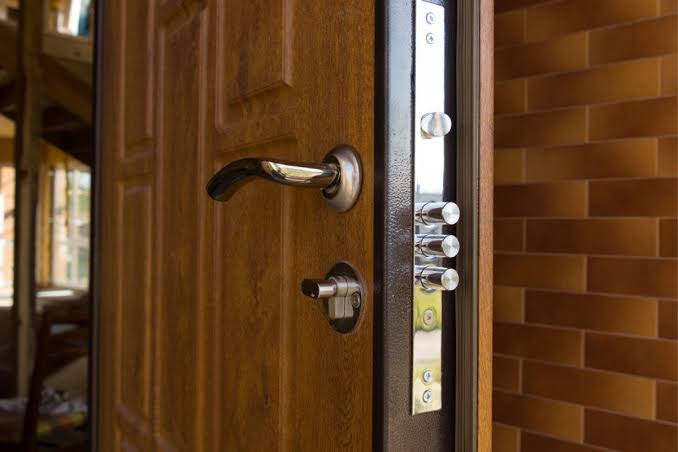
Depending on the door, lifting or operating the handle moves several locking points along the edge of the sash. These might include hooks, rollers, bolts or mushrooms designed to engage with corresponding keeps in the frame.
For the system to work as intended, those components need to meet in roughly the right places.
That’s where alignment comes in.
If a door drops slightly on its hinges, the locking points move with it. The keeps attached to the frame don’t.
At first, everything may still engage with a little extra resistance.
Then a little more.
Eventually the homeowner starts pulling the door towards them while lifting the handle because that’s the only way to get it locked.
It becomes normal surprisingly quickly.
But mechanically, the door is telling you something.
“It locks if I lift it”
That sentence crops up a lot.
So does:
“You have to push the bottom in first.”
Or:
“Pull it towards you while you turn the key.”
Every household seems to develop its own technique.
Visitors need instructions.
Children can’t lock the door at all.
One person in the house somehow knows exactly the right combination of lifting, pushing and swearing required to make everything line up.
Funny for a while.
Not really how an external security door should operate.
If physically moving the door is necessary to make the lock engage, there is usually an alignment issue somewhere. It might be relatively straightforward. Hinges may need adjustment. A door could have dropped slightly under its own weight. The frame or keeps may need attention.
But repeatedly compensating by force transfers additional strain into the locking mechanism.
Eventually another component can fail.
Doors rarely drop dramatically
This is partly why the problem gets ignored.
A UPVC door doesn’t normally wake up one morning sitting 15mm lower than it did the night before.
Movement happens gradually.
A millimetre here. Slight hinge wear there. Seasonal expansion. Years of opening and closing. The weight of the glass constantly pulling through the hinges.
The homeowner adapts at roughly the same speed.
At first the handle feels slightly firmer.
A few months later you need to pull the door closed more positively.
Then it catches occasionally during warm weather.
By the time somebody notices properly, the operating technique has already changed.
You can usually tell within minutes when this has been happening for years. There are wear marks around the keeps, scratches where locking points have been colliding and handles that feel as though they’ve spent half their lives being forced.
Sometimes the actual lock is still functioning perfectly.
It has simply been fighting poor alignment every day.
Multipoint doesn’t mean every point is necessarily locking
This is probably the misconception worth clearing up.
Having a multipoint lock doesn’t guarantee that every part of it is engaging correctly.
The mechanism can move while individual locking points struggle to enter their keeps fully.
The exact behaviour depends on the system and the severity of the misalignment, but the principle is straightforward: the components need to meet correctly.
Imagine trying to push a bolt into a hole that’s a few millimetres too high.
You might still force it partly inside.
That isn’t the same as the bolt entering cleanly to its intended depth.
A lot of homeowners understandably don’t inspect the edge of their door every evening to check what’s happening internally. They judge the system by feel.
If the key turns, they go to bed.
This is why a noticeable change in locking feel is worth taking seriously.
Not panicking over.
Just investigating.
The handle often takes the blame
Handles are unfortunate things.
They sit exactly where people feel resistance, so they get blamed for faults occurring elsewhere.
A stiff handle must mean a bad handle.
Except often it doesn’t.
The handle operates a mechanism running along the door edge. If several locking points are colliding with their keeps because the door has dropped, lifting the handle means physically forcing those components against resistance.
The handle is just the lever you’re using to do it.
Replace it without correcting the alignment and the new handle inherits exactly the same workload.
Eventually something else may give way.
Gearboxes are a common casualty of prolonged force. Internal components can wear or break after years of being operated under loads they weren’t supposed to experience.
At that stage, what might once have been an adjustment job has become a genuine mechanism failure.
Bifold doors add another layer
Bifolds make this more interesting because several panels have to cooperate.
The lead door needs to align correctly. Intermediate panels need to sit where they’re supposed to. Hinges, rollers and guides all influence the final position of the system.
One dropped panel can affect another.
Then the locking points start struggling.
A common response is to pull harder on the handle or physically push the panels together while locking them.
Again, if that’s necessary, something isn’t right.
The problem can also change with temperature. Aluminium frames exposed to strong sunshine expand slightly, so a borderline alignment issue may become much more obvious during warmer afternoons.
Then evening arrives, everything cools down and the door behaves better.
Homeowners understandably conclude that the heat is causing the fault.
More accurately, the heat may be exposing an existing one.
Proper bifold door repair and adjustment is often about identifying those relationships rather than simply replacing whichever component currently feels stiff.
Sliding patio doors fail differently
Traditional sliding patio systems bring their own security quirks.
Their biggest enemy is often the running gear underneath.
Rollers wear. Tracks become contaminated. The door gradually sits lower or starts moving unevenly. Once that happens, the relationship between the sliding panel and locking components changes too.
Homeowners usually notice the weight first.
The door feels heavier.
Then locking becomes awkward.
There is a tendency to treat these as two separate faults when they may share the same cause.
If worn rollers allow the sliding panel to sit incorrectly, the lock may no longer line up cleanly with the frame.
Replacing the lock alone won’t necessarily solve that.
Neither will repeatedly slamming the door harder.
And yes, people do that.
Quite enthusiastically.
Security problems aren’t always dramatic
We tend to imagine an insecure door as something visibly broken.
Cracked glass. Snapped handle. Lock hanging out.
Real life is often less obvious.
A security issue can begin with a door simply not closing as positively as it used to.
A draught appearing along one edge can be an alignment clue. So can daylight becoming visible where seals once compressed properly.
A locking point leaving unusual scrape marks is another.
None of those observations individually proves a door is insecure.
They do suggest the door isn’t sitting in the frame as originally intended.
That’s worth understanding.
Especially on external doors at the side or rear of a property where problems can remain unnoticed for longer.
The back door deserves the same attention as the front
There is a strange hierarchy in how people treat doors.
The front door gets noticed.
If the lock feels strange, people tend to deal with it fairly quickly. It’s used constantly, visitors see it and there’s an obvious association with home security.
Rear doors don’t always get the same treatment.
A stiff kitchen door might remain awkward for years.
Patio doors are even worse. If one side becomes difficult, people sometimes just stop using it.
Bifold panels might remain closed throughout winter and only reveal their problems when spring arrives.
Yet these are still external entry points.
Some also sit behind fences, extensions or gardens where they aren’t particularly visible from neighbouring properties or the street.
Ignoring a locking problem because it’s “only the patio door” doesn’t make much sense when you look at it that way.
Summer can hide problems that winter exposes
Seasonal changes complicate things further.
During warmer months, rear doors may be open frequently and locking performance gets less attention. People spend evenings in the garden. Patio doors remain open for hours. Bifolds are folded back whenever the weather allows.
Then autumn arrives.
Doors remain closed for longer.
Temperatures drop.
Rain increases.
Suddenly that slightly reluctant lock becomes something you’re operating several times a day.
Draughts also become noticeable again.
A poorly aligned door that seemed merely irritating in August can feel considerably more urgent on a dark November evening.
That’s why late summer isn’t a bad time to actually test external doors rather than waiting for the first cold spell.
Open them.
Close them.
Lock them normally.
No lifting. No shoulder against the frame. No special household technique.
See what happens.
Beware the adjustment that simply makes the lock easier
There is another repair shortcut worth mentioning.
Moving locking keeps can sometimes reduce resistance.
That doesn’t automatically mean it was the correct repair.
If a door has dropped significantly, continually repositioning keeps to follow the door can mask the underlying alignment problem rather than correcting it.
You can end up chasing movement around the frame.
The door continues dropping while the locking hardware gets repeatedly altered to accommodate it.
At some point there is nowhere sensible left to go.
Good diagnosis asks why the locking points stopped lining up in the first place.
Has the sash dropped?
Are the hinges worn?
Has the frame moved?
Is the mechanism itself damaged?
Are the keeps actually positioned incorrectly?
Those questions matter more than simply making the handle easier to lift before leaving.
Don’t test security by trying to break into your own house
This should probably be obvious.
Still.
If you suspect a door isn’t locking correctly, aggressively pulling, kicking or levering it isn’t a particularly clever diagnostic technique.
You can damage a perfectly repairable system.
There are safer things to look for.
Does the door close squarely without being lifted?
Does the handle operate with roughly the same resistance it used to?
Can you see obvious impact or scrape marks around locking keeps?
Has a gap appeared around part of the frame?
Does the lock behave differently when the door is open compared with when it’s closed?
That last observation can be particularly useful.
If a mechanism operates smoothly with the door open but becomes extremely stiff once the door closes, alignment deserves attention.
The lock has suddenly been given something extra to fight against.
Repair before failure is usually the cheaper point
Security faults have an annoying habit of becoming emergencies at inconvenient times.
The door locks in the morning.
Then it doesn’t lock at 10pm.
At that point you aren’t really choosing when to deal with it anymore.
Earlier intervention tends to leave more options.
A door that’s merely dropped may be adjustable.
A mechanism under strain may still be serviceable.
Worn components can sometimes be replaced before they damage neighbouring parts.
Wait until something snaps internally and the repair becomes a different job.
This is one reason UPVC door repairs shouldn’t necessarily be viewed as something reserved for completely failed doors. Changes in how a door operates can be useful warnings long before that point.
Not every stiff handle is a security emergency.
Not every rubbing door needs urgent attention that afternoon.
But there is a sensible line somewhere between noticing that a door has changed and spending the next two years developing an increasingly elaborate technique for locking it.
If you have to lift it, pull it, kick the bottom and then throw your weight against the handle, the door has already made its complaint fairly clear.
Probably worth listening.